
AI Contextual Governance Business Evolution Adaptation
How Context-Aware AI Governance Is Shaping Modern Business
Artificial intelligence is no longer an assistant working quietly in the background. It is now embedded in how businesses decide, operate, and compete. From customer interactions to risk evaluation and automation, AI increasingly influences outcomes that carry real consequences. As this shift accelerates, one thing becomes clear: governance must evolve alongside intelligence.
This is where ai contextual governance business evolution adaptation becomes essential. Traditional governance models were never designed for systems that learn, adapt, and behave differently depending on situation and impact. Businesses that succeed with AI are not simply adopting new tools. They are governing AI in a way that understands context, risk, and responsibility.
Why AI Governance Is Now a Business Evolution Challenge
AI governance is no longer a secondary compliance task. It directly affects how a business grows, adapts, and earns trust.
Modern organizations operate under growing pressure as AI becomes central to decision making:
- Automation happens in real time
- Regulations around AI are increasing
- Customers expect fairness and transparency
- Reputational risk is tied to algorithmic outcomes
When governance is rigid, innovation slows. When governance is weak, risk multiplies. AI contextual governance business evolution adaptation allows governance to adjust based on how AI is used and what is at stake, enabling growth without losing control.
What AI Contextual Governance Really Means
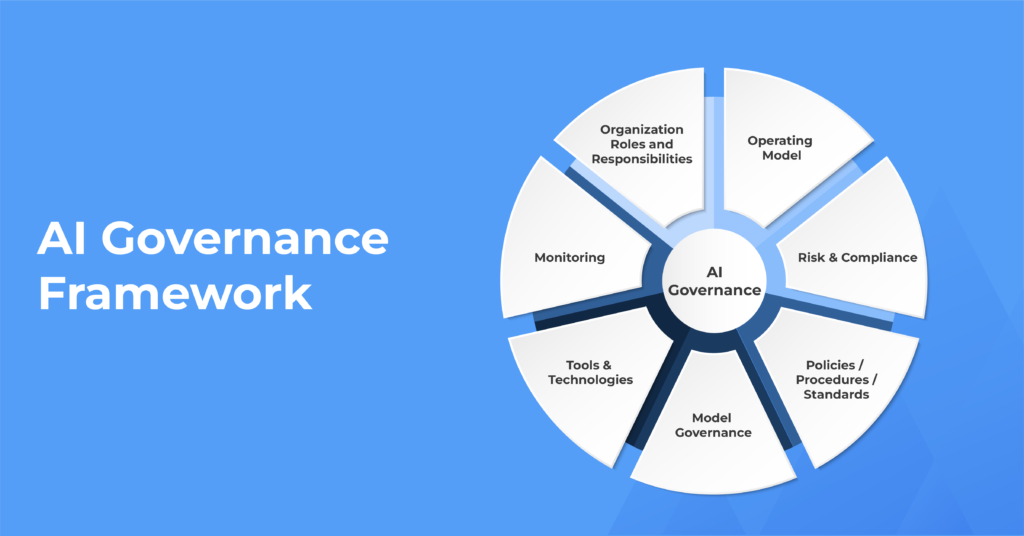
AI contextual governance is an approach where rules, controls, and accountability adapt to real-world conditions rather than remaining fixed.
In ai contextual governance business evolution adaptation, governance follows meaning instead of technology alone.
Context is shaped by factors such as:
- The business function using AI
- Who is affected by the decision
- The sensitivity of the data involved
- The potential impact if the decision is wrong
This turns governance into a living system that evolves with the organization rather than slowing it down.
Why Context Changes Everything in AI Decision Making
The same AI system can be low risk in one scenario and high risk in another.
A recommendation engine suggesting products carries limited impact.
The same system influencing financial approval carries significant consequences.
Context defines acceptable error, transparency, and oversight. AI contextual governance business evolution adaptation ensures that governance reflects real-world impact instead of applying identical rules everywhere.
How AI Contextual Governance Drives Business Evolution
Scaling AI Without Losing Trust
As AI expands across teams and departments, contextual governance provides clarity without friction:
- Low-riskuse cases move quickly
- High-impact decisions receive stronger safeguards
- Teams innovate within clearly understood boundaries
This balance allows businesses to evolve while preserving trust.
Faster Adaptation to Change
Context-aware governance enables rapid adjustment when conditions shift:
- New regulations trigger updated controls
- Market changes adjust AI thresholds
- Strategic priorities reshape oversight
This adaptability is at the core of ai contextual governance business evolution adaptation.
Alignment With Long-Term Strategy
Governance quietly shapes what AI is allowed to do. It influences investment decisions, automation limits, and organizational confidence. Contextual governance ensures AI strengthens business strategy rather than undermining it.
How AI Contextual Governance Works in Practice
AI contextual governance relies on signals that describe the situation in which AI operates. These signals guide oversight continuously rather than at fixed checkpoints.
Common signals include:
- Business domain
- User role
- Data sensitivity
- Decision authority
Risk is evaluated continuously. Controls tighten as risk rises and relax when risk is lower. Human oversight is introduced when decisions carry meaningful consequences. This dynamic response defines ai contextual governance business evolution adaptation in real operations.
Industry Examples of Contextual Governance
In financial services, credit decisions are governed by customer impact and regulatory context.
In healthcare, patient data usage is governed by clinical intent and safety boundaries.
In retail, personalization is balanced with consent, fairness, and customer trust.
These examples show how ai contextual governance business evolution adaptation transforms governance from a constraint into a competitive advantage.
Who Is Responsible for Contextual AI Governance
Effective governance is a shared responsibility.
Leadership defines risk tolerance and strategic boundaries.
AI and data teams embed governance into systems and monitor behavior.
Legal and risk teams ensure regulatory alignment and audit readiness.
Contextual governance succeeds when responsibility is clear and collaborative.
Why AI Contextual Governance Matters More Than Ever
Trust has become a business asset. Customers judge organizations by how AI behaves when it matters most.
Regulation is accelerating globally, demanding explainability and accountability. AI contextual governance business evolution adaptation provides the structure regulators expect without slowing innovation.
Reputation is fragile. A single poorly governed AI decision can damage years of credibility. Context-aware governance reduces this risk.
Best Practices for Implementation
Successful organizations follow a few core principles:
- Define clear risk tiers
- Map AI use cases to context
- Design adaptive policies
- Monitorsystems continuously
Governance must evolve as the business evolves.
Common Mistakes to Avoid
Common Mistakes to Avoid
- Treating governance as static
- Defining context vaguely
- Over-automating high-risk decisions
- Failing to updatepolicies as systems change
Context changes. Governance must adapt.
The Future of AI Contextual Governance
Contextual governance is moving toward intelligent trust systems. Future models will interpret intent, adjust controls in real time, and shape AI behavior proactively.
Organizations that adopt ai contextual governance business evolution adaptation early will scale AI with confidence and credibility.
Conclusion
AI contextual governance business evolution adaptation is not about controlling AI for the sake of control. It is about enabling AI to operate responsibly in complex, changing environments.
When governance understands context, businesses evolve faster, adapt smarter, and earn trust naturally. Context is no longer optional. It is the foundation of sustainable, AI-driven growth.
FAQ'S
When should a business start thinking about contextual AI governance
A business should start as soon as AI moves beyond experiments into real decisions that affect customers, employees, or finances. Waiting until problems appear often means reacting too late.
Is contextual governance only relevant for large enterprises
No. Even small and mid-sized companies benefit when AI influences pricing, approvals, or customer interactions. Contextual governance scales with the size and maturity of the business.
How does contextual governance support faster decision making
By matching controls to risk, it removes unnecessary approvals for low-risk use cases while focusing attention on decisions that truly matter. This keeps teams moving without losing oversight.
Can existing AI systems be adapted to contextual governance
Yes. Most organizations introduce contextual governance gradually by adding context signals, risk tiers, and monitoring layers to systems that are already in production.
What happens if context changes over time
Contextual governance is designed for change. As regulations, markets, or business priorities shift, governance rules adjust instead of being rewritten from scratch.
What is the biggest risk of ignoring contextual governance
The biggest risk is loss of trust. AI decisions may technically work but fail socially, legally, or ethically, creating damage that is far harder to fix later.